
The Dry January Experiment
What Happens to Your Blood Pressure After Just One Less Drink?

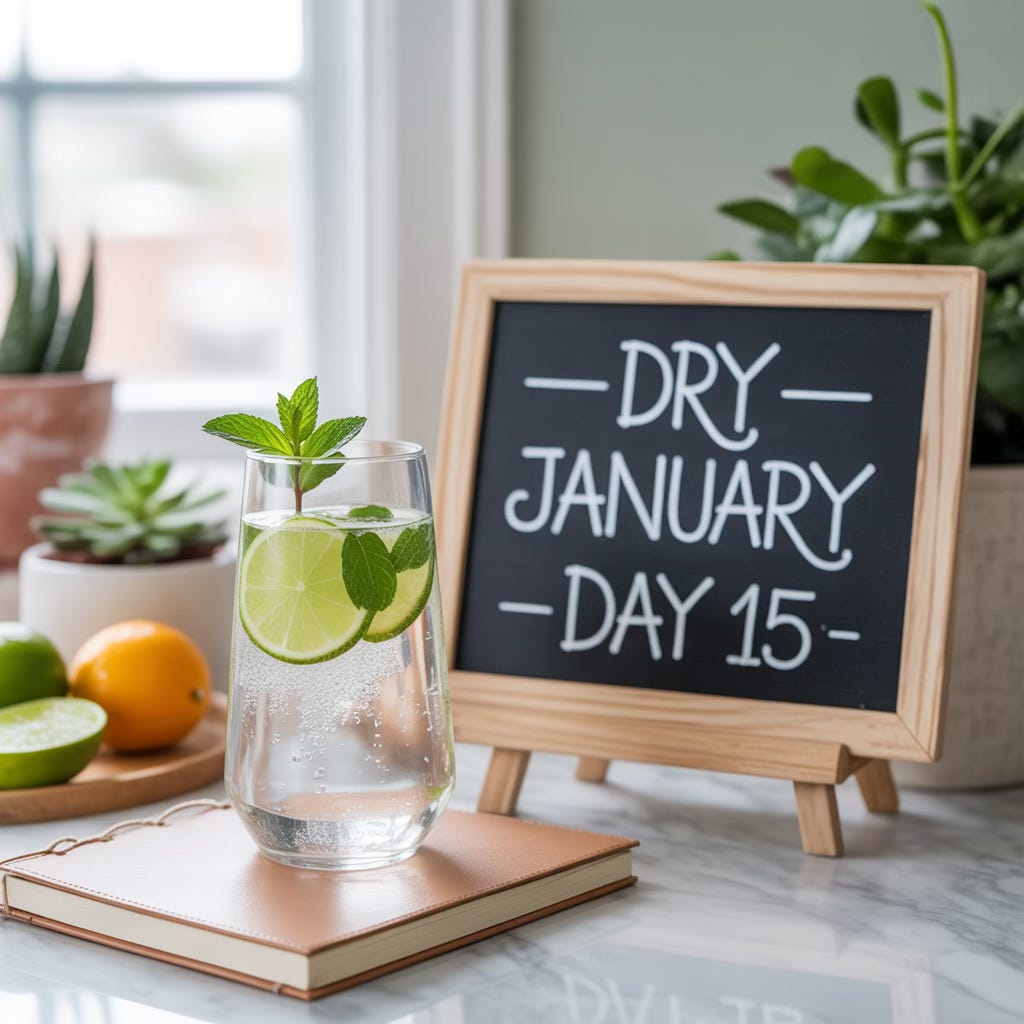
Every January, millions of people embark on a 31-day experiment. For some, it’s a habit reset; for others, it’s pure curiosity.
While the benefits of cutting back are broad, one specific health effect is becoming impossible to ignore. New evidence suggests that Dry January isn’t just a break for the liver, it may be an important intervention for the heart.
A Simple Question with a Clear Answer
A remarkable study published in JACC tracked nearly 59,000 adults over more than a decade. Researchers didn’t just look at heavy drinkers; they focused on everyday, “light” consumption, people having one drink a day or less.
The results were strikingly consistent:
When people stopped drinking, their blood pressure went down.
When people started drinking, their blood pressure went up.
This was not a randomized trial, so it carries the usual limitations of observational research. But it also wasn’t a one-time snapshot. By tracking within-person changes over ten years, the investigators showed that blood pressure is strongly associated with drinking habits. This has been seen in other studies too, but this study was large (almost 60,000 people and more than 350,000 visits), long, and longitudinal, which strengthens the evidence.
The “No Safe Threshold” Finding
One of the most important takeaways from this research is that there was no “free pass” level of consumption.
Reducing alcohol by just one standard drink per day was associated with roughly a 1 mm Hg drop in systolic blood pressure. While 1 mm Hg might sound negligible, at a population level, a shift that size translates into thousands of fewer strokes and heart attacks every year. And more than that, those who decreased 3 or more drinks a day had 3-4 mm Hg drops in systolic blood pressure, comparable to the effect seen with some antihypertensive medications. That’s a major change.
Whether the participants drank beer, wine, or spirits didn’t matter. The driver was the ethanol itself. This undermines the idea that certain types of alcohol are “heart-healthy” exceptions to the rule.
Why Blood Pressure Matters Now
Blood pressure is a “quiet” metric. You can’t feel it rising, yet it remains the primary driver of cardiovascular disease worldwide.
For many, there is uncertainty about whether reducing alcohol might be good for their heart health. This study clarifies that uncertainty: even small reductions in alcohol create measurable improvements in cardiovascular health.
Dry January as a Data Point
Dry January doesn’t have to be a lifetime vow or a moral declaration. Think of it as a low-stakes study where you are the only participant.
If you track your blood pressure, this month offers a unique opportunity to see the “why” behind the “what.” It is a chance to observe how your specific body responds when the ethanol is removed from the equation. The most informative approach is to look at the average of repeated measurements over time.
The Bottom Line
There are many reasons people drink, and many reasons they choose to stop. This isn’t about judgment; it’s about having the most accurate information possible.
The “just one drink” habit may be more impactful than we once thought. This January, those who are participating in going dry aren’t just giving something up, they’re likely improving their cardiometabolic health.